Choosing flies
What to put in your first fly box
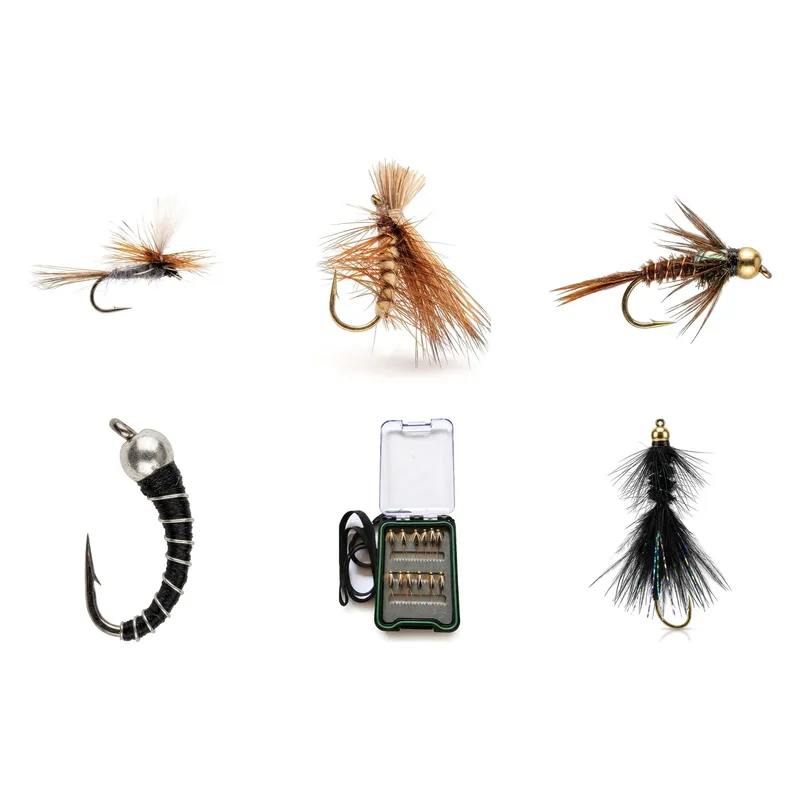
Six patterns cover almost everything. The rest of the catalogue is refinement.
Cover the water column, not the entomology
Beginners are usually sold a box of two hundred assorted flies and no way to choose between them. That is backwards. What matters is not how many patterns you own but whether you can cover the three places a fish might be feeding: on the surface, in the film just under it, and on the bottom. Add something that moves, and you have a working box.
Nearly every fly ever tied is a variation on one of four jobs. Buy one good version of each job rather than twenty mediocre versions of one.
The six
In the order you are likely to need them.
| Pattern | Job | Sizes |
|---|---|---|
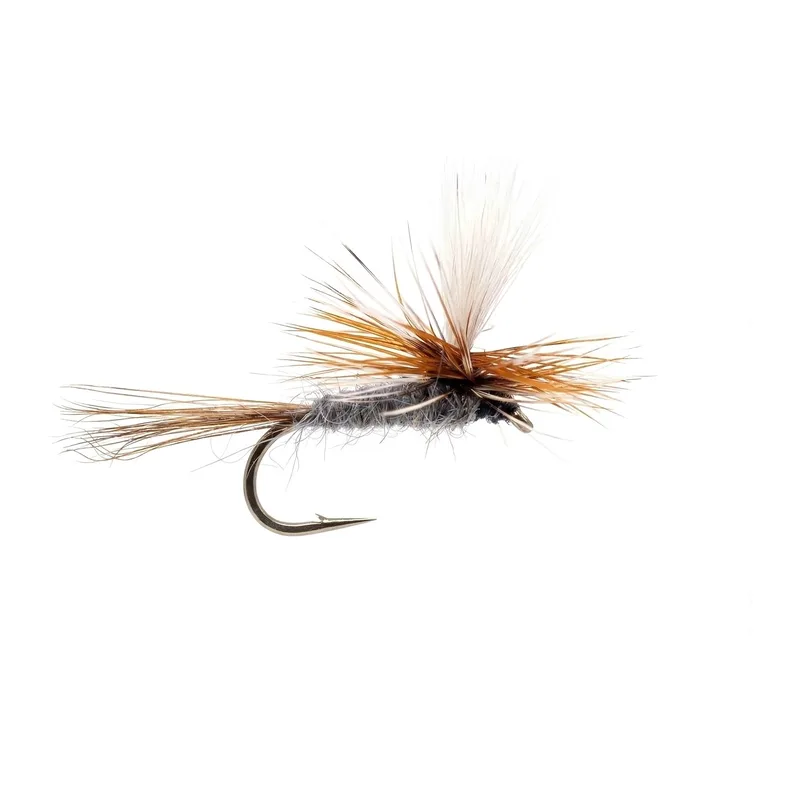
| Parachute Adams | Any mayfly on the surface. The most useful dry fly ever designed. | #12–16 |
| Elk Hair Caddis | Caddis, and any dry fly in rough water — it floats when others drown. | #12–16 |
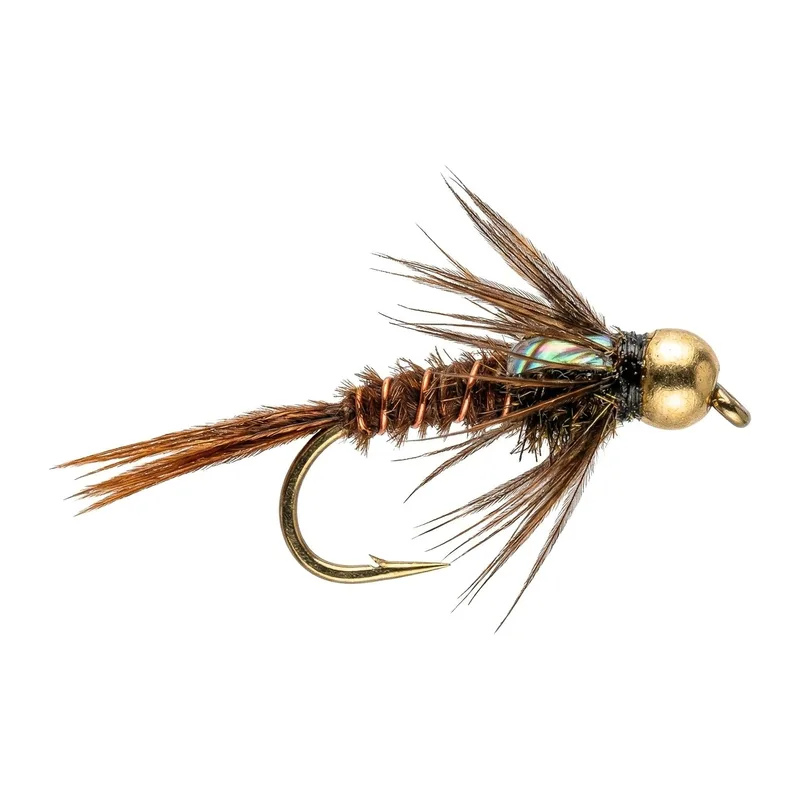
| Pheasant Tail Nymph | The everyday mayfly nymph. Tungsten to get down. | #12–16 |
| Zebra Midge | Midge pupae, available every day of the year. Cold and clear water. | #16–20 |
| Prince Nymph | Attractor. When you cannot see what is hatching, start here. | #12–16 |
| Woolly Bugger | Something alive and moving — leech, baitfish, big nymph. | #6–10 |
Buy sizes, not more patterns
Once you have the six, the highest-value next purchase is not a seventh pattern. It is the same six in a size smaller. Fish refuse flies for being too big far more often than for being the wrong shape, and dropping two hook sizes solves more refusals than changing dressing.
Carry three of anything you would be upset to lose. A pattern that is working is a pattern you are about to leave in a tree.
How many of each
For a season of regular fishing: half a dozen of each dry, a dozen of each nymph, and half a dozen streamers. Nymphs go fastest because they spend their lives near the bottom, which is where the rocks are.
Mentioned above